Malachi: Facing faith's failures
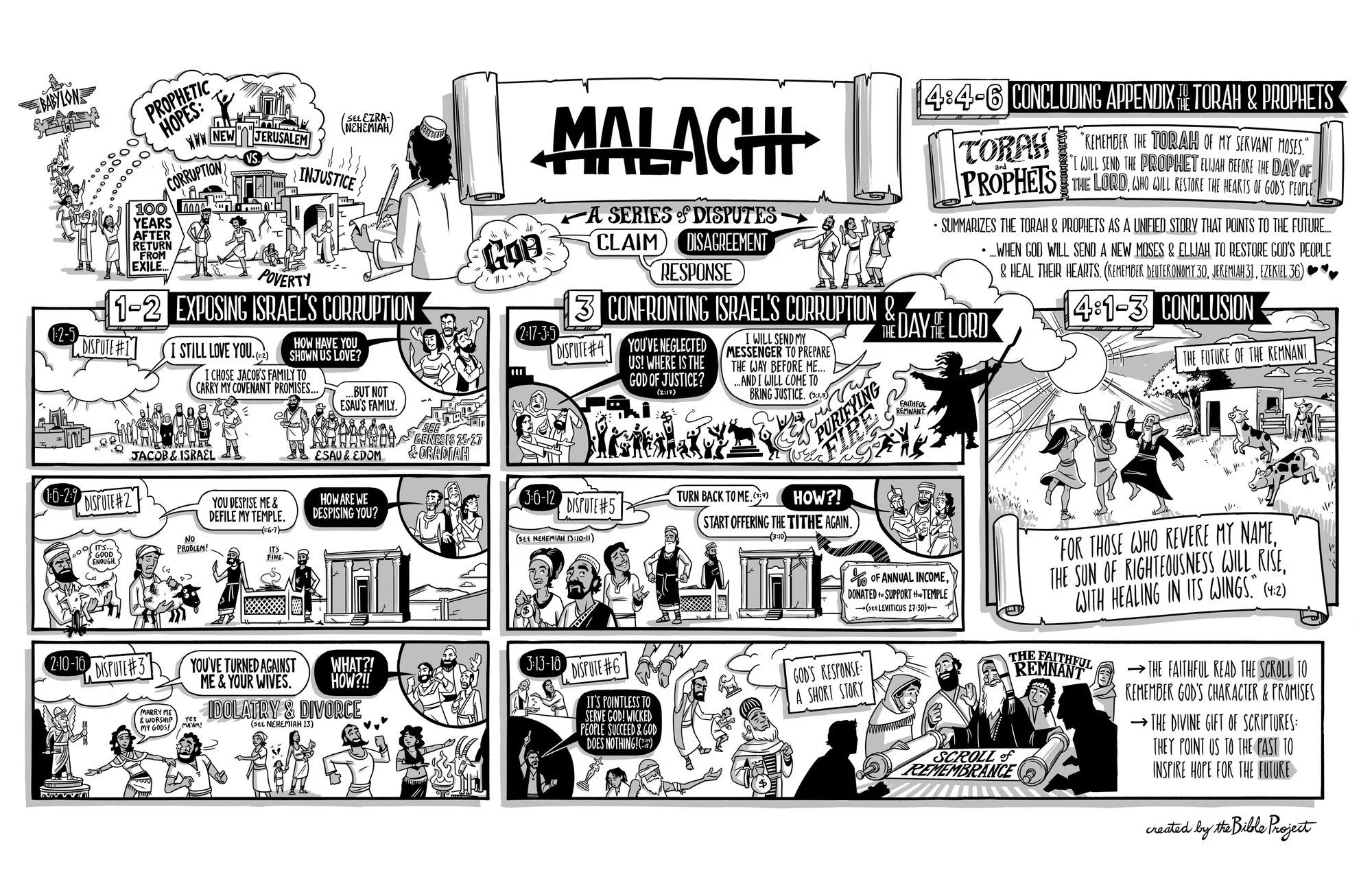
In this series, we step into the world of Malachi around 420BC, the last of the Hebrew prophets, and the final book in our Old Testament.
The book consists of six disputes between God and Israel, revealing that Israel's exile had not achieved its intended effect, as the people prove incapable of remaining faithful to their covenant with God. These words were directed at a people whose faith had grown cold and whose religious practices had become mere rituals.
Malachi addresses several key issues prevalent among the Israelites: complacency in worship, corruption among the priests, and a general sense of disillusionment with God's promises— themes that resonate with our own commonly experienced struggles today.
How often do we find ourselves going through the motions, feeling disconnected from the vitality of our faith? How do we respond when our leaders fail us, when we ourselves fail, or when we feel that God is distant?
Despite Israel's and our own failings, Malachi points to a surprising hope: God's unwavering faithfulness. Through Malachi, God promises to send a messenger who will announce the arrival of God's kingdom, ultimately establishing His rule characterized by peace, healing, and justice.
Malachi's message is a reminder that when our faith malfunctions, by facing faith's failures, God graciously calls us back and provides the way for a more authentic relationship with Him.
Life Group Discussion Starters
-
Discussion starters:
Read Malachi 1:1-5. How do you understand the comparison made between Jacob and Esau in these verses?
What does it mean for Israel to be 'in Jacob', or for us to be 'in Christ'?
Why do we in Christ sometimes think God doesn't love us? What sustains us in this feeling?
Are there 'things we have to have' or 'can't live without' at the price of good relationship with God? What are our expectations of blessing?
What do we 'need' to motivate trust in God's love and faithfulness when doubts arise? How many things must go our way to feel content enough?
-
Discussion starters
Read Malachi 1:6-14. What are some of the issues that God has with the priests in this passage?
Why might being honoured be important to God?
In what ways can we be like the priests, and what would we want to change in our approach? E.g. Steve spoke about modern “Therapeutic Moralistic Deism” reflecting some of the same heart-attitudes of the priests.
How might learning to examine our motivations to uncover fear or pride be helpful?
How might prayer help or hinder in uncovering and changing our motivations?
What difference does God’s commitment to his covenant despite Israel’s (and our) failures (see Malachi 2:1-9, esp. v4), make in our approach to changing our motivations?
-
Discussion starters
Read Malachi 2:10-16.
a. Are there any aspects of this text that you find uncomfortable or difficult to understand?
b. What do you perceive God’s posture to be as you read a passage like this?
c. Why is it important that we understand God as speaking as the wounded covenant partner in this passage?
Steve suggested that the double warning to “guard yourselves in your spirit” could be understood to mean cultivating our prophetic imagination (seeing an alternative to cultural captivity) and covenant imagination (seeing your life inside God’s story). To discern this we could ask ourselves questions like:
'Am I seeing an alternative to cultural captivity, or like Israel, am I becoming absorbed in empire-like values of marriage and justice because my ethics and hope have been drawn from the culture around me?' and 'Am I living my life inside God's story by inhabiting it with my imagination, ethics, and hope?'Why is what we imagine about ourselves, and God, and the world around us,
a. so important, and
b. how might we cultivate this alternate imagination?The language used by Malachi here seeks to reawaken the covenantal imagination of the people like a palette of colours to form a picture of marriage. If you consider the imagination of marriage that our culture inhabits and compare it with a kingdom vision of marriage, what distinctions do you see?
-
Discussion starters
Read Malachi 3:6-12 (and verse 5). What questions does this passage raise for you?
What was the purpose and significance of tithes and offerings for Israel as God’s covenant people?
In what ways have you or might you be robbing God?
Why is supporting those who serve the community of faith important?
Why is caring for the poor a way of loving God?
What stops you giving?
What encourages you to give?
‘Tithing is good news for the rich and bad news for the poor’. Discuss.
What is a helpful and healthy approach to giving money regularly?
-
Discussion starters
Read Malachi 3:6-12 (and verse 5). What questions does this passage raise for you?
What was the purpose and significance of tithes and offerings for Israel as God’s covenant people?
In what ways have you or might you be robbing God?
Why is supporting those who serve the community of faith important?
Why is caring for the poor a way of loving God?
What stops you giving?
What encourages you to give?
‘Tithing is good news for the rich and bad news for the poor’. Discuss.
What is a helpful and healthy approach to giving money regularly?
-
Discussion starters
Read Malachi 3:13-4:3
How does the Bible function for us as a “book of remembrance”?
What are some helpful and unhelpful ways of reading the Bible?
How can we be confident that God cares about justice when we see the reality that “evildoers not only prosper but they put God to the test and they escape” (3:15)?
Read Malachi 4:4-6. This section functions as a coda to Malachi, tying it back to the Torah (the first 5 books of the First Testament), and to the rest of the Prophets, and forward to the future messianic hope.
What do you think is surprising, and confusing, for the Jews when Jesus arrives claiming to bring with him the kingdom of God?
How does Jesus’ life, death and resurrection mirror, or miss, ‘the day’ as it is anticipated in Malachi (see Mal. 3:1-2, 4:1, 4:5)?
What do you think Jesus is doing in establishing communion as an act of remembrance? (see Lk 22:19, 1Cor. 23-25)